




Domain registration options refer to the combination of domain extensions, registrars, registration lengths, and privacy settings available when you claim a web address for your business or personal site. Choosing the right types of domain registration options shapes your brand credibility, search visibility, and long-term control over your online identity. For Australian small business owners, the decision involves more than picking a name. It means understanding who manages your domain, how long you register it for, and what protections apply to your contact details.
1. What types of domain extensions can you register?
Domain extensions are the suffix at the end of a web address, and they fall into three main categories: generic top-level domains (gTLDs), country-code top-level domains (ccTLDs), and new niche gTLDs.
Generic top-level domains (gTLDs) include .com, .net, and .org. These are the most recognised globally and carry strong credibility with audiences worldwide. A .com address signals an established, professional presence and works well for businesses targeting customers beyond Australia.

Country-code top-level domains (ccTLDs) are tied to specific nations. The .au extension signals an Australian business to both customers and search engines, which can improve local search rankings. Australian businesses must meet eligibility requirements to register a .au domain, which adds a layer of trust.
New niche gTLDs include extensions like .biz, .cloud, .store, and .tech. These are more available than .com alternatives and can reinforce a specific industry angle. The trade-off is lower public recognition compared to .com or .com.au.
For most Australian small businesses, a .com.au or .au domain is the strongest starting point. Pairing it with a matching .com registration protects your brand from competitors or squatters claiming the global version.
2. Who manages domain registration, and how do registrars differ?
Domain registration involves three distinct roles: the registry, the registrar, and the hosting provider. Confusing these roles is one of the most common mistakes small business owners make.
The registry maintains the official database for a given TLD. Verisign, for example, manages the .com registry. You never deal with the registry directly.
The registrar is your direct point of contact. Registrars accredited by ICANN handle the legal and administrative side of registration, renewal, and transfers. Examples include Cloudflare Registrar and GoDaddy. A reseller is a third party that sells registrations through an accredited registrar, often with less direct control for the buyer.
The hosting provider runs the servers where your website files live. Hosting providers do not register domains. They simply point your domain to their servers once you connect the two. Many businesses buy both from the same company, which is convenient but creates dependency.
Pro Tip: Keep your registrar and hosting provider separate. This gives you full control to switch hosts without risking access to your domain.
3. How do domain registration methods and terms work?
Registration terms and settings are where most small business owners lose control of their domains. Getting these right from the start prevents costly problems later.
Registration length is the first decision. Registrars typically allow terms of 1 to 10 years, though some TLDs enforce different maximum limits. Registering for multiple years upfront reduces the risk of accidental expiry and can signal stability to search engines.
Auto-renewal is the single most important setting to activate. Platforms like Cloudflare and Amazon Route 53 enable auto-renew by default, which protects you from losing a domain you have spent years building brand equity around. A lapsed domain can be snapped up by a competitor or domain squatter within days of expiry.
Domain privacy masks your personal contact details in the public WHOIS database. WHOIS records are no longer uniformly public due to GDPR, but privacy policies still differ by registrar and extension. Some registrars include privacy protection at no extra cost. Others charge a subscription fee. Microsoft 365, for instance, includes a free domain privacy subscription when you purchase a domain through its platform.
The registration process itself requires you to enter contact details across multiple roles: Registrant, Admin, Technical, and Billing. These contact roles receive verification notices and administrative alerts critical for domain control. Entering accurate details at registration is not optional. Outdated contact information is the leading cause of administrative failures when renewing or transferring a domain.
Pro Tip: Set a calendar reminder six weeks before your domain renewal date, even with auto-renew active. Payment card changes are the most common reason auto-renewals fail.
4. Comparison of domain registration options
Different domain types and registrar categories suit different needs. This table gives you a direct comparison to guide your decision.
| Option | Cost range | Privacy included | Term limits | Best for |
|---|---|---|---|---|
| .com (gTLD) | Low to moderate | Varies by registrar | 1–10 years | Global audience, brand recognition |
| .com.au / .au (ccTLD) | Moderate | Varies by registrar | 1–5 years | Australian businesses, local SEO |
| .biz / .cloud (new gTLD) | Low | Varies by registrar | 1–10 years | Niche branding, availability |
| ICANN-accredited registrar | Moderate | Often included | Full range | Direct control, transfers, renewals |
| Reseller registrar | Low to moderate | May cost extra | Full range | Bundled packages, convenience |
| Hosting-bundled domain | Low upfront | Rarely included | Limited | Beginners, simple setups |
The clearest takeaway from this comparison is that ICANN-accredited registrars offer the most direct control. Resellers and hosting-bundled options trade convenience for flexibility.
5. Which domain registration option suits your situation?
The right choice depends on your business stage, audience, and budget. These scenarios cover the most common decisions small business owners face.
You are launching a new Australian business. Register a .com.au or .au domain as your primary address. Also register the matching .com to protect your brand. Use an ICANN-accredited registrar for direct control.
You are targeting a global audience. A .com domain is the recognised standard for international credibility. Pair it with your local ccTLD if you also serve Australian customers.
You are on a tight budget. New gTLDs like .store or .biz cost less and have better name availability. The trade-off is lower public recognition, so weigh that against your branding goals.
You want maximum privacy. Choose a registrar that includes WHOIS privacy at no extra cost. Separating your registrar from your hosting provider also reduces the risk of vendor lock-in if you need to move platforms.
You are managing multiple domains. Use a single ICANN-accredited registrar for your entire portfolio. Centralising management makes renewals, transfers, and DNS updates far simpler.
You bought a domain through a platform like Microsoft 365. Buying a domain does not automatically configure it for email or other business services. You still need to update DNS records and set up the correct administrative roles before the domain functions fully.
A common pitfall is treating the domain registration process as a one-time task. Domains require active management: updated contact details, monitored renewal dates, and periodic reviews of privacy settings as registrar policies change.
Key takeaways
Choosing the right domain registration option means matching your extension type, registrar, term length, and privacy settings to your specific business needs.
| Point | Details |
|---|---|
| Extension type matters | Choose .com.au or .au for Australian credibility; .com for global reach. |
| Separate registrar and host | Keeping these roles apart gives you full control over renewals and transfers. |
| Enable auto-renewal | Activate auto-renew and keep payment details current to prevent accidental expiry. |
| Activate domain privacy | Choose a registrar that includes WHOIS privacy to protect your contact details. |
| Keep contact roles accurate | Outdated registrant details cause administrative failures during renewals and transfers. |
What I have learned managing domains for Australian businesses
The single most underestimated risk in domain management is not choosing the wrong extension. It is losing access to the registrar account itself.
I have seen businesses register a domain through a web developer or agency, then lose all access when that relationship ends. The domain sits in someone else’s account, and recovering it requires a formal dispute process that can take weeks. The fix is simple: always register your domain in an account you personally own and control.
The second thing I tell every small business owner is to separate their registrar from their hosting provider. It feels convenient to bundle everything with one company, but the moment you want to switch hosts, your domain becomes a bargaining chip. Keeping these roles separate means you can move your website to a new host in hours without touching your domain at all.
On registration length, I recommend at least two years for any domain you are serious about. The cost difference is small. The protection against accidental expiry is significant. And for privacy, the GDPR changes have made WHOIS data less public than it used to be, but registrar policies still vary widely. Check whether your registrar includes privacy protection before you register, not after.
The most reliable registrars in 2026 are transparent about their renewal pricing, include privacy by default, and give you clear DNS management tools. If a registrar makes it hard to transfer your domain away, that is a warning sign worth acting on.
— James
Domain registration made straightforward with Com
Com is an Australian-based domain and website solutions provider with personalised local support. For small business owners who want clarity without the technical headaches, Com handles domain registration and management with the kind of hands-on guidance that generic platforms do not offer.
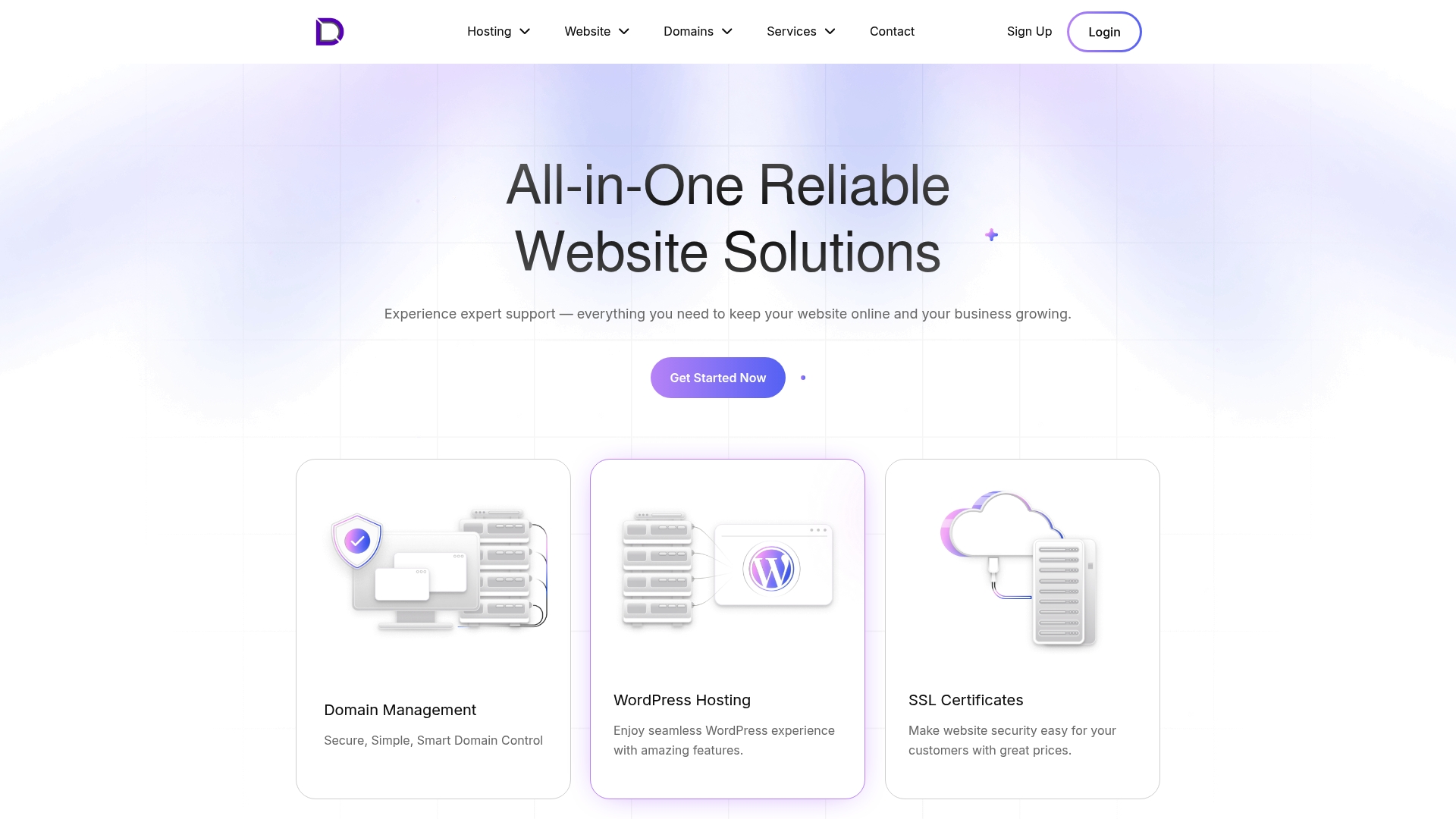
Whether you are registering your first .com.au, managing a portfolio of domains, or separating your registrar from your hosting setup, Com gives you the tools and the support to do it properly. The team understands Australian eligibility requirements, renewal risks, and privacy settings. Explore Com’s domain solutions for businesses and get your online presence set up with confidence.
FAQ
What are the main types of domain registration options?
The main types are gTLDs (.com, .net, .org), ccTLDs (.com.au, .au), and new niche gTLDs (.biz, .cloud, .store). Each differs in cost, availability, and audience recognition.
What is the difference between a registrar and a hosting provider?
A registrar registers and manages your domain name. A hosting provider stores your website files. They are separate services, and keeping them with different companies gives you more control.
How long can you register a domain for?
Most registrars allow registration terms of 1 to 10 years, depending on the TLD. Registering for multiple years reduces the risk of losing your domain through accidental expiry.
Does domain privacy hide all my details?
Domain privacy masks your contact details in the public WHOIS database, but WHOIS privacy policies differ by registrar and extension. Controlled access may still be granted under certain circumstances, such as legal requests.
Do I need to do anything after buying a domain?
Yes. Buying a domain does not automatically configure it for email or other services. You need to update DNS records and set up the correct contact roles before your domain works fully for your business.
Leave a Reply