




Keeping site safety, management and compliance in sync is a daily challenge for Australian construction teams as multiple tools and paper records cause gaps in oversight. Many software platforms either lack local industry templates or force teams to manage safety, scheduling and document control in separate apps with separate support desks. This review compares core features, local support and mobile accessibility across three Australian site management tools so you can match one to your project needs and team size.
Table of Contents
- Distribute Group
- SiteBook
- SiteConnect
- Comparing Options: Distribute Group vs. SiteBook and SiteConnect
Distribute Group
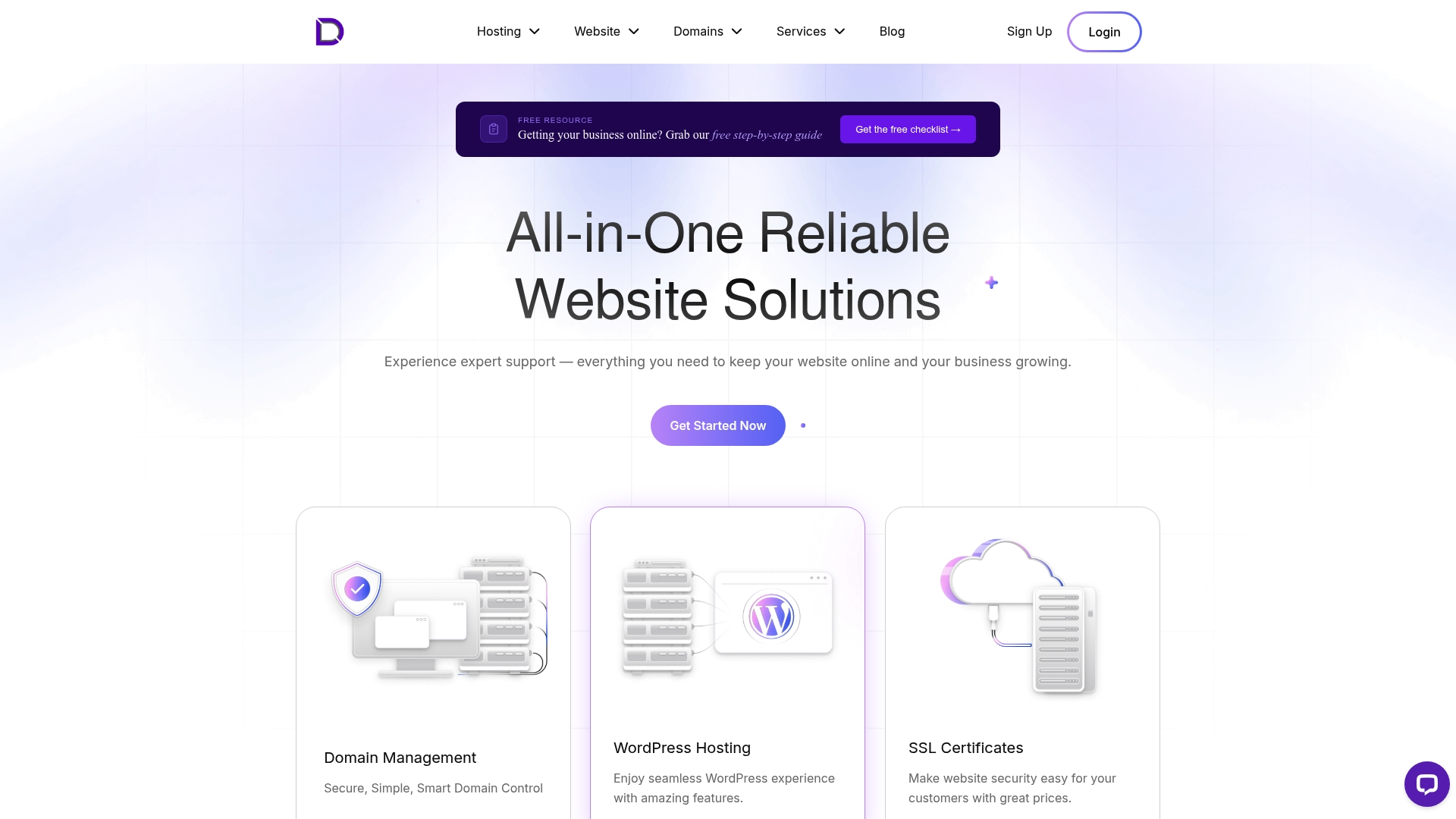
At a Glance
The vendor advertises a 100% uptime SLA on some hosting plans, a striking claim for an Australian agency that also bundles domain, design, SSL and SEO tools under a single support desk. Their pitch centres on localised, personalised support for Australian businesses.
Core Features
- 100% uptime SLA for selected hosting plans, plus scalable cloud and WordPress hosting tiers.
- Domain registration and management, brokerage and registry locking to keep ownership tight.
- One-click setup for WordPress and common CMS, automated backups and security monitoring.
- SSL provisioning, professional email hosting, and SEO tools including MarketGoo-style optimisation guidance.
- Performance tracking and site/server monitoring with templates and premium design packages for mobile-ready launches.
Key Differentiator
Australian-based personalised support combined with a comprehensive suite of scalable online solutions. The team pairs hands-on local assistance with hosting, domain management, design, security and SEO so you don’t juggle multiple vendors when you launch or grow a site.
Pros
- Fast, reliable hosting backed by cloud infrastructure and performance monitoring that reduces downtime risk for customer-facing sites.
- Personalised local support from an Australian team that can explain registry rules, assist with domain transfers and offer phone or ticket help in local hours.
- A single provider for domain, SSL, email and design keeps handovers simple; you hand one account to your accountant or marketing lead and the essentials are all in the same place.
- Scalable plans let a small retail site grow into larger tiers without immediate migration, which suits companies planning staged growth.
- Dedicated support with claimed 24/7 availability and expert assistance helps when a server or DNS issue occurs outside business hours.
Cons
- May lack some advanced security features compared with specialised security providers, so larger organisations with strict security needs should audit the offering closely.
Who It’s For
Small to medium Australian businesses and entrepreneurs that want an all-in-one provider for domain, hosting and a launch-ready website with a local support team. Good fit for retailers, professional services and growing companies that prefer one vendor for routine site operations.
Unique Value Proposition
One-click WordPress and CMS setup paired with a dedicated Australian support team and an online resource library gives small teams a lower-friction route to publish and maintain sites. That combination reduces coordination across vendors and keeps technical handovers within a single local relationship.
Real World Use Case
A small Melbourne retailer registers a new domain with Distribute, sets up branded email, chooses a premium template and uses the one-click WordPress setup. The store goes live on scalable hosting with automated backups, ongoing monitoring and basic SEO help from the same support contact.
Pricing
Plans vary by service. Hosting starts at around AUD 9.95/month for basic shared hosting, with higher tiers and premium design packages priced above that; custom quotes are available for enterprise or bespoke projects.
Website: https://distribute.com.au
SiteBook
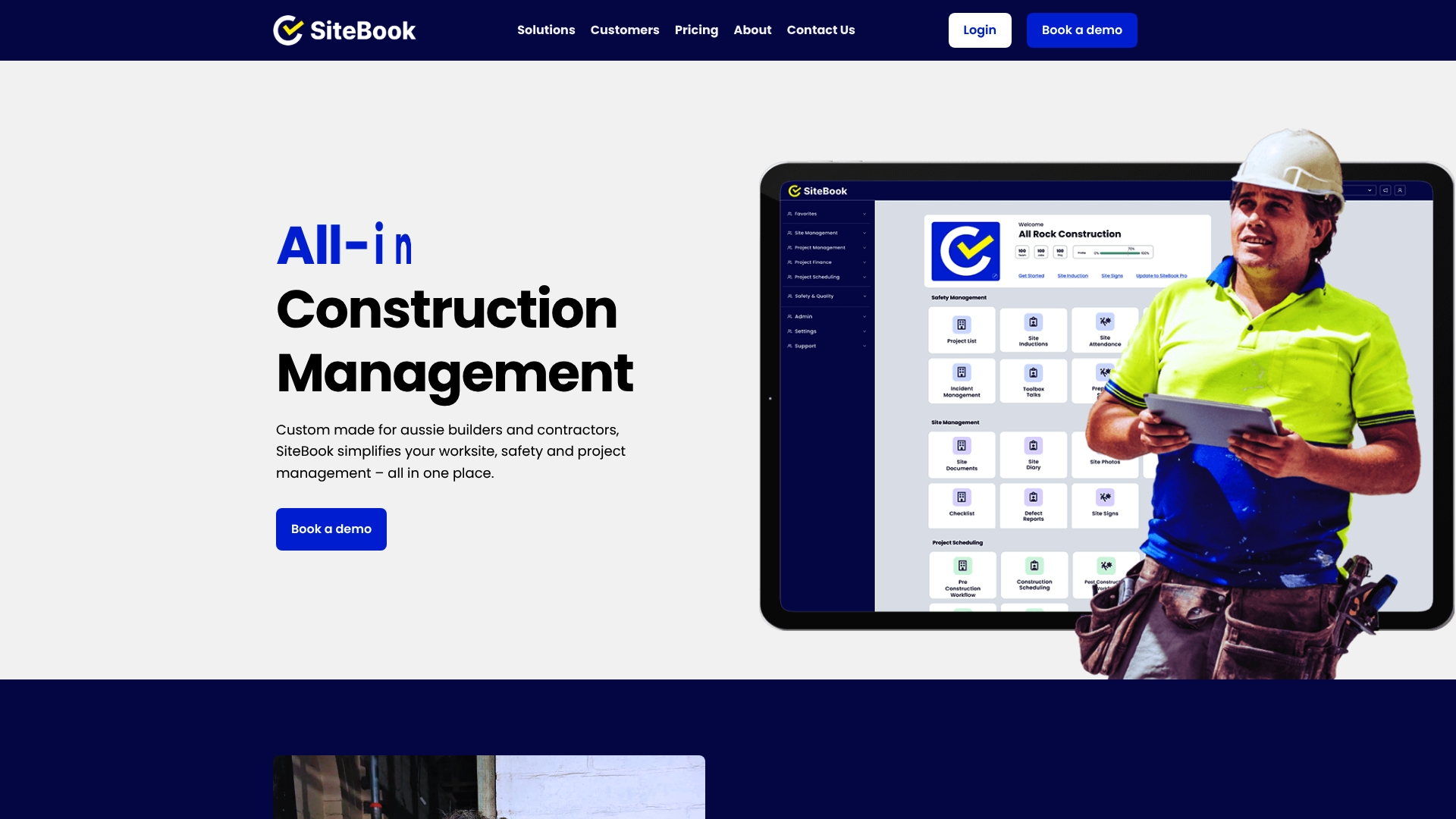
At a Glance
SiteBook reports being trusted by thousands since 2012, and it bundles safety, site, scheduling and finance modules into a single construction-focused toolkit. Mobile and desktop access means staff on site and office teams share the same live records and photos.
Core Features
- Safety Management — automate inductions, manage SWMS and incident reports from mobile devices; useful for toolbox talks and compliance logs.
- Site Management — real-time updates, centralised document control and photo storage so plans and site imagery stay paired with tasks.
- Project Scheduling — Gantt charts, task automation and progress reports that map short programmes and milestone dates.
- Project Finance — budgets, job costing, invoicing and variance tracking to keep margins visible during construction phases.
- Document Management — central repository for plans, specifications and approvals with version controls for approvals and signoffs.
Key Differentiator
SiteBook is purpose-built for the Australian construction industry and combines safety, site operations, scheduling and financial tracking in one product. That industry focus means templates, checklists and workflows reflect local compliance practices rather than a generic project template.
Pros
- Simple interface and shallow learning curve make it practical for small teams and subcontractors who need to get productive quickly.
- Regular updates driven by user feedback keep feature gaps closing over time rather than leaving the tool stagnant.
- The all-in-one approach reduces the number of disjointed spreadsheets and apps you juggle between office and site.
- Intuitive dashboard surfaces live project health at a glance, helping you spot a slipping programme or budget variance fast.
- Mobile access supports onsite inductions and instant photo uploads, which saves time compared with post-shift administration.
Cons
- Limited third-party review content makes independent evaluation harder; most available praise is vendor-sourced.
- Potential scalability limitations for very large or highly complex projects; enterprise resource planning and multi-office resourcing are not core strengths.
- Depth of specialised enterprise features such as advanced BI reporting or custom APIs may be lower than niche finance or ERP tools.
When It May Not Fit
If you manage dozens of overlapping large programmes with dedicated resource planners, SiteBook may lack advanced enterprise scheduling and resourcing features. The platform appears optimised for small to medium project complexity rather than large multi-phase developments.
Who It’s For
Small to medium Australian construction teams, builders, contractors and project managers who want a single system to handle safety, site records, scheduling and basic finance. If your priority is quick adoption and mobile site use, this aligns well with daily site routines.
Real World Use Case
A mid-sized builder runs multiple sites using SiteBook on tablets and desktops. Site supervisors complete inductions onsite, upload daily photos and update progress. Office staff reconcile job costs and invoices, reducing administrative lag between site events and financial updates.
Pricing
Pricing is available on request via demo or contact. You need to speak with the vendor to get licence tiers and setup costs for site counts, module selection and any training required.
Website: https://sitebook.com.au
SiteConnect
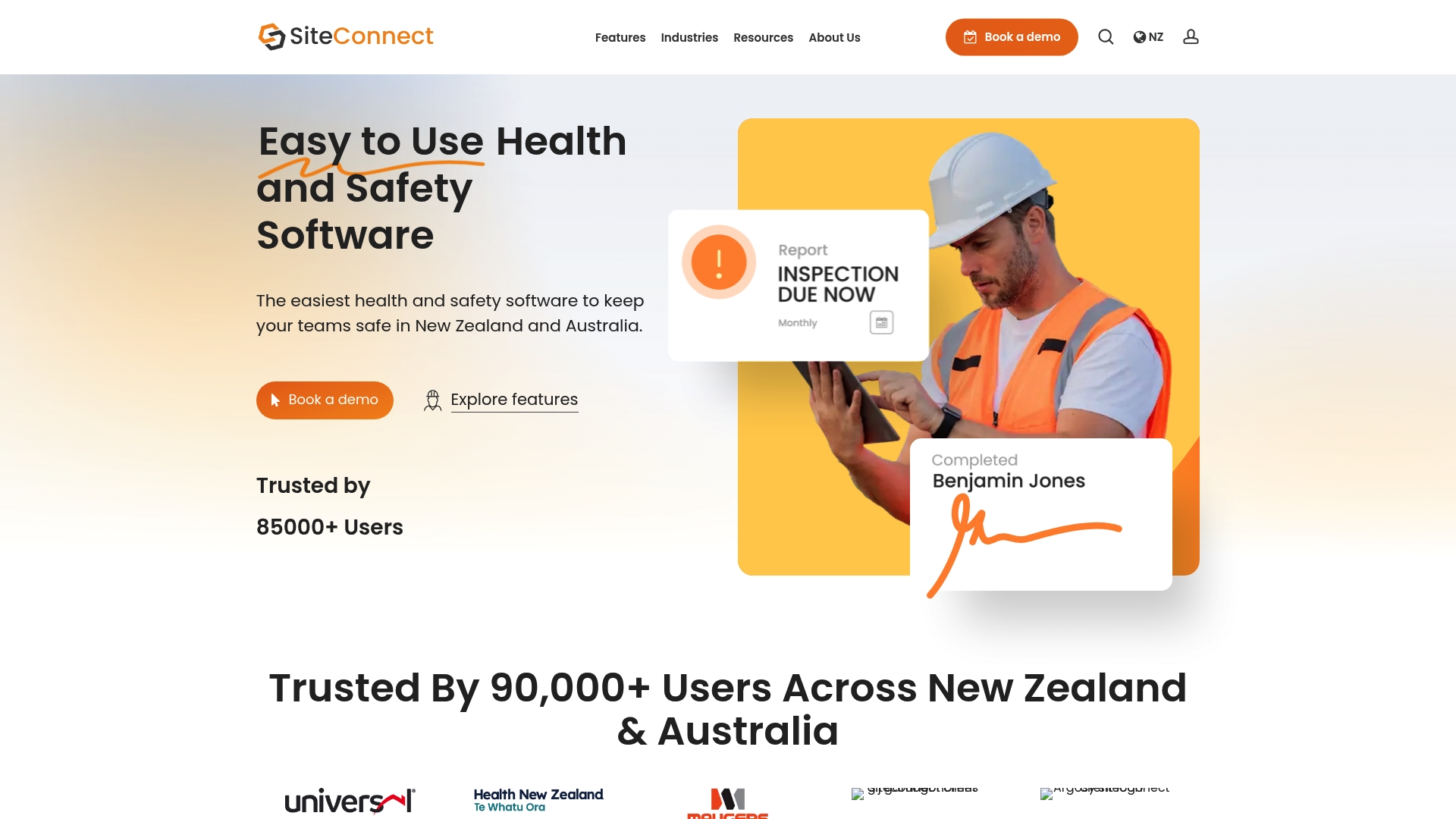
At a Glance
Automated site sign-in that uses geofencing, QR codes and kiosks is central to SiteConnect’s pitch — practical for sites with many daily arrivals. The app bundles incident reporting, contractor checks and hazard registers into a single workplace safety workflow.
Core Features
- Digital forms and workflows for routine safety tasks, with records stored centrally for audits.
- Risk management including hazard registers and assessments that link to corrective actions and investigations.
- Contractor prequalification and compliance tracking so subcontractors meet site criteria before arrival.
- Automated site sign-in via geofencing, QR codes and kiosks for visitors and workers.
- Incident reporting, investigation and corrective actions with status tracking.
Key Differentiator
SiteConnect positions itself around having every major safety function in one deployable package. The platform’s automation and workflow links mean a hazard report can create a task, notify stakeholders and feed into contractor records without separate tools.
That single-platform approach reduces the number of spreadsheets and pockets of paper you carry between sites.
Pros
- Reduces paperwork by moving forms, inductions and incident logs into one app; records are kept digitally for audits and follow up.
- Real-time communication with workers and contractors makes it easier to push corrective actions and see who has acknowledged them.
- Configurable workflows let you adapt templates for construction, manufacturing or logistics without rebuilding from scratch.
- Supports automatic record keeping across multiple sites, which helps when preparing for third-party safety audits.
Cons
- Several users report a steep initial learning curve; the interface is not the most intuitive for administrators setting policies.
- Initial setup and configuration can be time consuming for organisations without a dedicated safety systems lead.
- Some aspects of usability may frustrate teams used to consumer-style apps; adoption requires training and discipline.
When It May Not Fit
If your team needs a plug-and-play tool that works with zero configuration, SiteConnect may demand too much upfront time. Small operations with low digital literacy or no-one responsible for setup will struggle with the platform’s configuration overhead.
It is also less suited to organisations that prefer separate best-of-breed tools for sign-in, contractor management and incident tracking.
Who It’s For
Safety and site managers at small to medium enterprises in high-risk sectors who need a single safety management application across multiple sites. Ideal where digital records, contractor oversight and consistent inductions matter.
Real World Use Case
An Australian construction firm uses SiteConnect for site inductions, hazard reports and contractor compliance across three projects. Incident investigations are recorded digitally and corrective actions assigned to specific supervisors, which tightened audit trails and reduced duplicate paperwork.
Pricing
Pricing is not published; SiteConnect typically provides quotes on request or during demos. Expect vendor-led proposals tailored to site count, kiosk hardware and onboarding support.
Website: https://siteconnect.io
Comparing Options: Distribute Group vs. SiteBook and SiteConnect
When selecting a platform to streamline online operations or site management tasks, businesses encounter distinct differences in capabilities and positioning. Below is a comparative analysis highlighting strengths, trade-offs, and fit scenarios among Distribute Group, SiteBook, and SiteConnect.
Unified Operation Efficiency
Distribute Group delivers a solution by consolidating hosting, domain management, design, security, and SEO tools into a single platform managed by local Australian support. This integration is particularly advantageous for businesses seeking simplicity in vendor coordination and scalability without the need for migration between providers.
By contrast, SiteBook focuses on construction project management, targeting operational workflows such as site safety, schedule tracking, and financial oversight. While effective for construction projects, its narrower scope limits its utility for general website-centric businesses.
SiteConnect, designed for safety management, excels in handling automated workflows for compliance tasks across high-risk sectors, but lacks extensive design or hosting features found in its competitors.
Support and Learning Curve Considerations
The learning experience varies significantly. Distribute Group offers Australian-based support with local hours, which suits businesses prioritising local expertise. Its straightforward workflow for WordPress and content management systems makes it accessible for teams with limited technical knowledge.
SiteConnect, while in compliance tracking, demands upfront configuration expertise, which can be challenging for teams without dedicated IT leads. For project-oriented users where safety protocol management is critical, SiteBook provides intuitive interfaces that simplify onboarding compared to SiteConnect.
Best Fit Scenarios
- Distribute Group suits businesses seeking an integrated hosting, domain, and website solution with local support. Retailers and growing SMEs can particularly benefit.
- SiteBook is best for medium-sized Australian construction firms needing combined safety, scheduling, and financial oversight for projects.
- SiteConnect fits organisations in high-risk industries seeking centralised compliance management across multiple sites, especially when automation is key.
Our Pick: Distribute Group
Distribute Group stands out for businesses aiming for simplicity in managing online presence due to its unified service offering. The Australian support team enhances the customer experience for local operations. However, businesses exclusively requiring construction or safety workflows may prefer SiteBook or SiteConnect, respectively.
Australian Digital Platform Comparison
Table highlights integration, local support, and tailored solutions for diverse operational needs.
| Platform | Core Feature | Key Differentiator | Best For | Pricing | Notable Limitation |
|---|---|---|---|---|---|
| Distribute | Domain, hosting, design, SEO tools | 100% Uptime SLA and local personalised support | Australian SMEs and entrepreneurs | AUD 9.95/month | May lack advanced security features |
| SiteBook | Safety, site, scheduling, and finance modules | Built for Australian construction industry | Construction SMEs | Not disclosed | Potential scalability limitations for large projects |
| SiteConnect | Automated site sign-in and safety workflows | Comprehensive safety management in one package | High-risk SME safety managers | Not disclosed | Configuration may demand significant upfront time |
Simplify Your Site Management with Com
Managing multiple site operations like scheduling, safety checks and document control can feel overwhelming. If you found the article on “Top 3 sitemanage.au alternatives 2026” insightful, then Com offers a focused solution born from those exact challenges. Our Australian-based platform provides personalised local support while combining domain, hosting and website tools designed to help your business grow online with confidence and care.
Choose Com for fast setup and friendly guidance from a team who understands Australian business needs. Visit our landing page or explore the Uncategorized – Distribute Group category to see how Com can help you take control of site management. Book a call today and get your WordPress or CMS site live with a dedicated local contact supporting every step.
Frequently Asked Questions
What features make Distribute a suitable choice for Australian businesses?
Distribute offers a 100% uptime SLA on selected hosting plans, making it a reliable option for Australian businesses. The article highlights their comprehensive suite of services, including domain registration, design support, and SEO tools, all backed by local assistance. Businesses can expect a streamlined experience by using Distribute as their single provider.
How does Distribute compare with SiteBook regarding project management?
SiteBook excels in safety and compliance management for construction projects with features like real-time updates and automated induction processes. While Distribute’s strengths lie in domain and hosting services, SiteBook specifically addresses the needs of the construction industry by integrating project finance and scheduling in one platform. Construction teams may find SiteBook a better fit for extensive project tracking.
Can I expect 24/7 support from Distribute?
Distribute claims to offer 24/7 support, which ensures assistance is available when needed. Their emphasis on local support allows for expert help during Australian business hours, which can be advantageous for companies facing after-hours server issues. This can enhance customer satisfaction and reduce downtime.
What limitations should I consider before choosing Distribute?
While Distribute provides solid hosting and support, it may lack certain advanced security features compared to specialised security providers, making it less ideal for larger organisations with stringent security requirements. Businesses should assess their specific needs carefully before committing to ensure that the offering aligns with their operational security standards.
Which platform offers better support for scalable websites, Distribute or SiteConnect?
Distribute is uniquely positioned with scalable hosting options that allow small retail sites to grow without needing immediate migration, enabling staged growth effectively. While SiteConnect focuses on safety management and incident reporting, Distribute’s hosting features cater well to businesses looking to expand their online presence with minimal disruptions. Organizations planning for growth should consider Distribute for their hosting needs.
Leave a Reply